
Insights from the ILA Berlin and Eurosatory 2026 - A look at the technologies and strategies shaping the industry
In the defence sector, resilient supply chains, technological autonomy and flexible manufacturing are now among the key success factors. Modern defence systems are created through a combination of innovative platforms, high-performance components and manufacturing technologies that ensure their long-term operational capability.
For suppliers, this development means one thing above all: the need for reliable partners who can consistently supply high-quality critical components and ensure a secure, resilient supply chain.
At the same time, strategic collaborations and interdisciplinary partnerships are becoming increasingly important. By pooling expertise along the value chain, high-performing networks are created that shorten development times, accelerate innovation, and strengthen security of supply in the long term.
The use of drones is changing the requirements for components
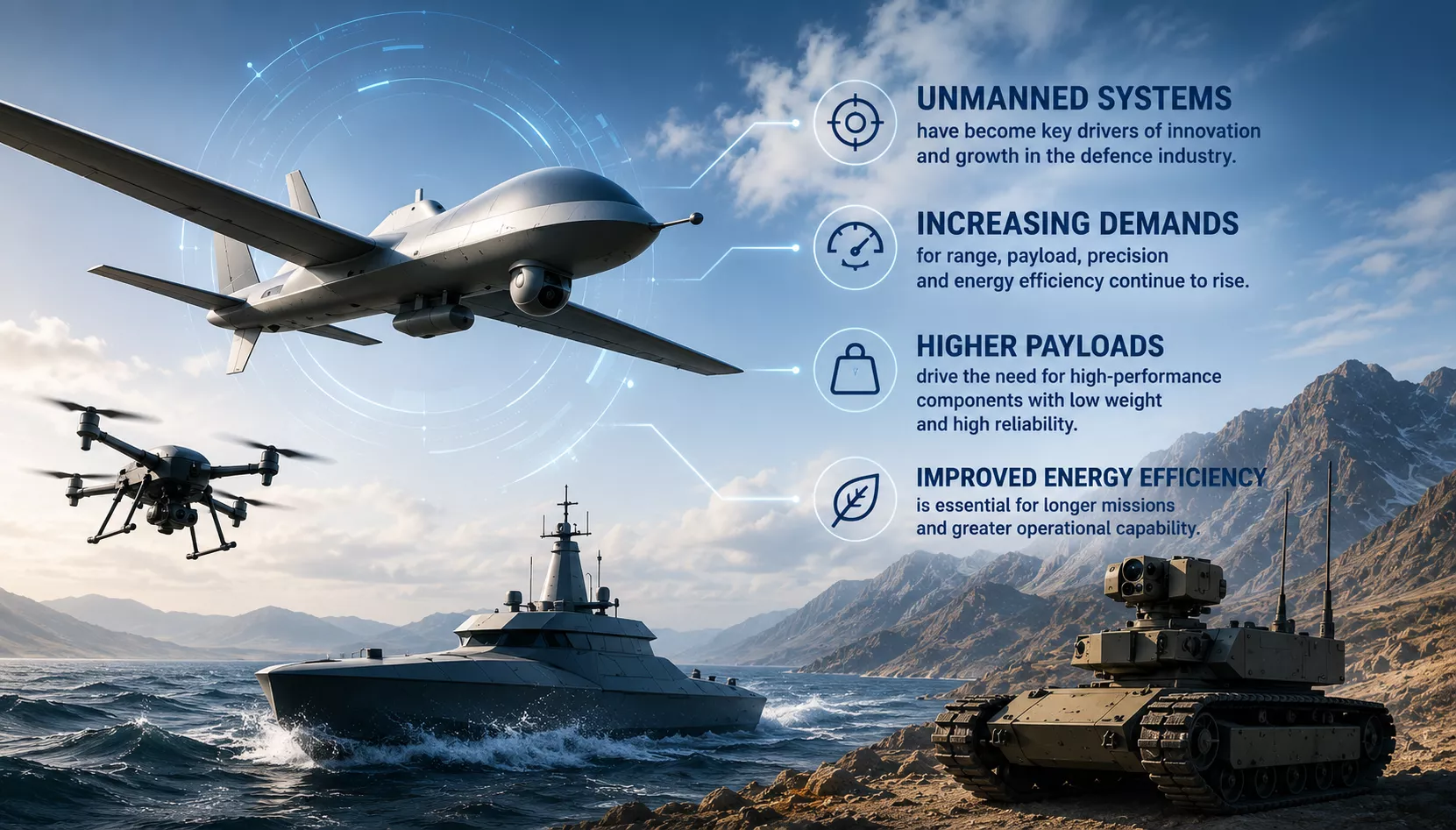
Unmanned systems are now one of the most important drivers of innovation and growth in the defence sector. Demand for increased range, payload, precision and energy efficiency is constantly growing.
Consequently, there is also a growing need for lightweight, highly reliable high-performance components.
Specialised manufacturing technologies are becoming increasingly important, particularly in the following areas:
Additive manufacturing can shorten development cycles
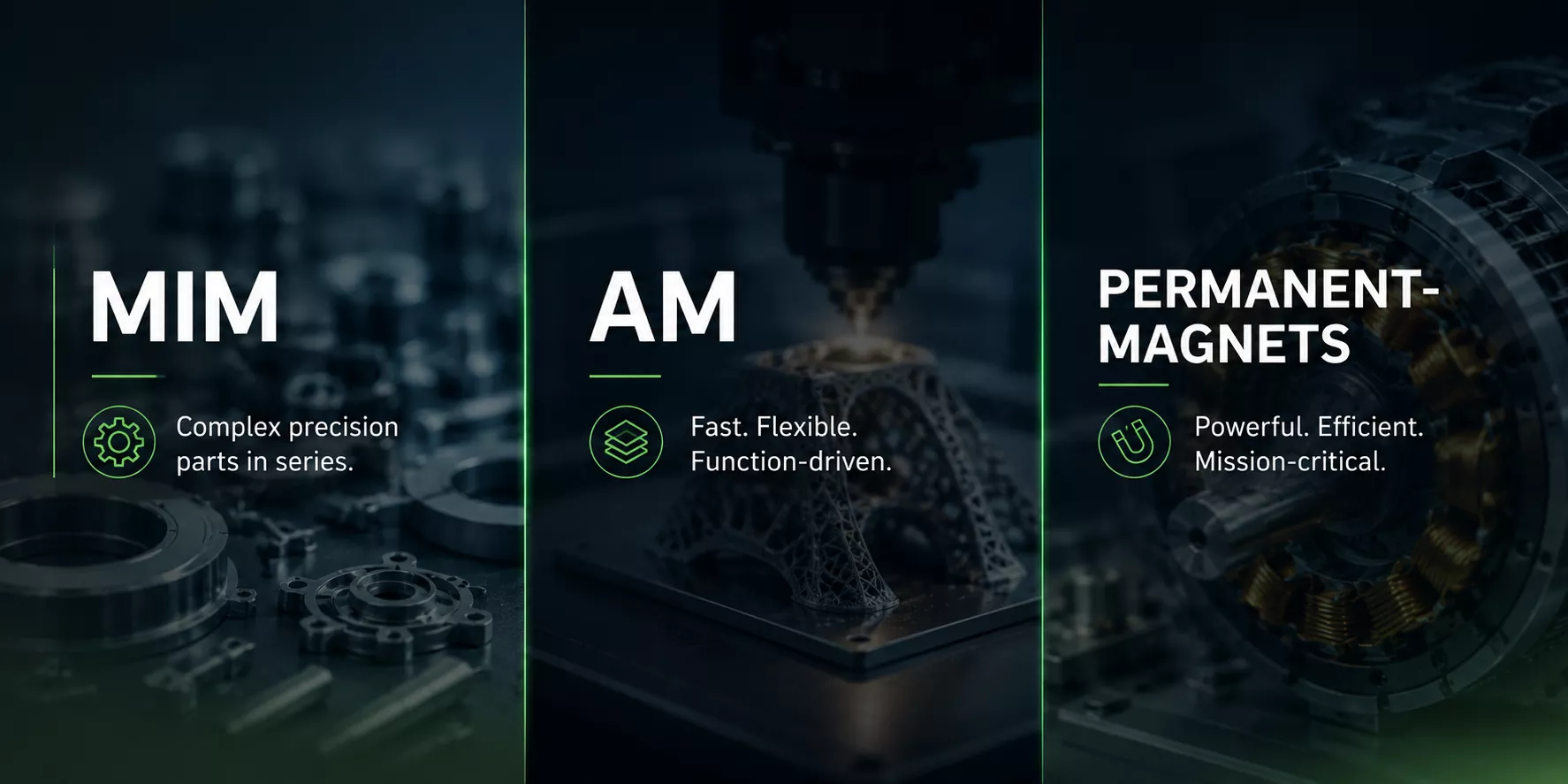
Additive manufacturing enables the rapid production of prototypes and functional components, quick design optimisation and the realisation of complex geometries without the need for additional tools.
Furthermore, the technology offers advantages in terms of supplying spare parts, producing small batch sizes, and creating functionally integrated lightweight structures – wherever speed and flexibility are crucial.
The question today is no longer whether to use AM, but rather at which point in the value chain the technology can be utilised most effectivel
MIM enables the mass production of complex precision components
While additive manufacturing has proven its worth in terms of development and flexible manufacturing, Metal Injection Molding (MIM) is a cost-effective solution for the mass production of highly complex metal components.
This technology has been used in the defence industry for decades.
Today, it is particularly well-suited to small, geometrically complex metal components that require tight tolerances, high strength and a high-quality surface finish.
MIM combines design freedom with high process stability, which is a decisive advantage for safety-critical applications.
Permanent magnets: the key to electric drive systems
Another trend is the growing electrification of modern defence systems. Electric drives, gimbal systems, and positioning mechanisms are now integral to numerous applications.
High-performance permanent magnets are essential to this technology. They allow for compact designs, high power densities and energy-efficient drive solutions, for instance in drones, autonomous platforms and high-precision sensor systems.
As demands for efficiency and dynamics increase, so does the importance of high-quality magnet solutions and a reliable supply of these key components.
Conclusion: Technological sovereignty starts with the components
"The future of the defence sector is not determined solely at system level. It starts with the components, materials, and manufacturing technologies that enable modern applications in the first place."
New materials and the efficient use of materials are also becoming increasingly important. Lightweight construction, high-strength materials and functionally optimised solutions help reduce weight, boost performance and ensure resources are used efficiently.
Metal injection moulding, additive manufacturing and high-performance permanent magnets play a key role in this, enabling innovative product development, supporting resilient supply chains and laying the foundations for tomorrow's high-performance defence systems.
Would you like to learn how MIM, additive manufacturing, and high-performance permanent magnets can improve the effectiveness of modern defence systems? Talk to our experts about your application. We look forward to discussing it with you!

Contact us

Für das beste Nutzungserlebnis empfehlen wir, die Website im Hochformat anzusehen. Drehen Sie dazu einfach Ihr Smartphone.